
How Insulin Resistance Silently Develops: 10 Early Warning Signs You Shouldn’t Ignore

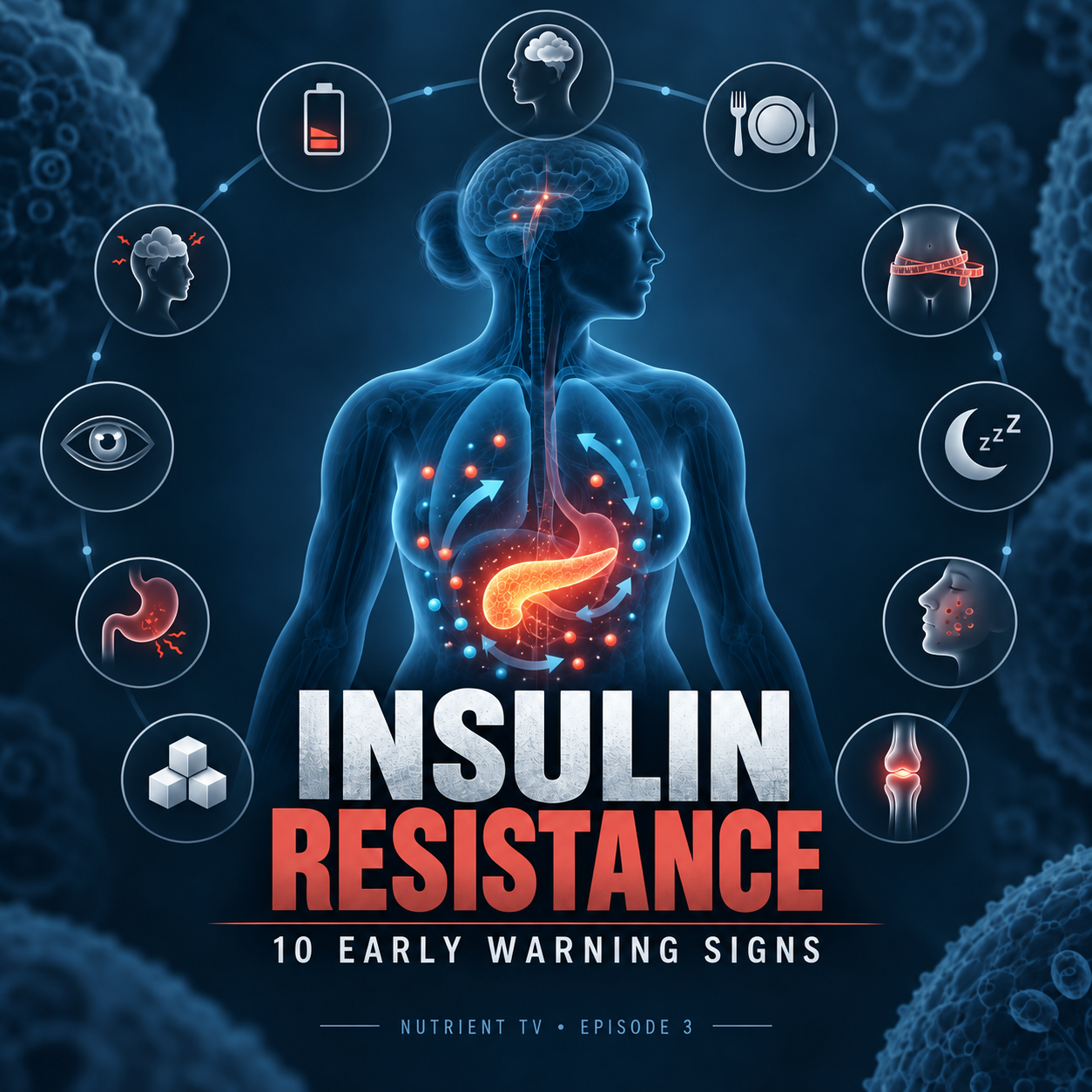
Insulin resistance can develop quietly.
The body keeps producing insulin, but the cells stop listening as well. The pancreas compensates by producing more insulin. Blood sugar may look normal for years because insulin is working overtime.
That is why the problem can be easy to miss.
Here are ten patterns that can signal that it is time to pay closer attention to metabolic health.
1. Increasing Belly Fat
Episode 3 repeatedly connects belly fat with insulin resistance and metabolic dysfunction. Expanding abdominal fat can be a visible sign that the body’s fuel-storage system is being pushed in the wrong direction.
2. Constant Cravings
When someone lives on sugar, starch, snacks, and ultra-processed carbohydrates, cravings can become part of the cycle. Nutrient TV argues that controlling carbohydrates and stabilizing blood sugar can help break that pattern.
3. Energy Crashes
A person who is constantly moving from a high-carbohydrate meal to an energy crash and then back to another snack may be trapped in a glucose-centered fuel cycle.
4. Prediabetes
Prediabetes is a major warning that glucose regulation is moving in the wrong direction. It should be treated as an opportunity to act, not simply a waiting room for type 2 diabetes.
5. Rising Blood Sugar
When blood glucose begins trending higher, the body may already have been compensating for insulin resistance for years.
6. Type 2 Diabetes
By the time type 2 diabetes is diagnosed, insulin resistance may have been developing for a long time.
7. Difficulty Losing Belly Fat
Episode 3 emphasizes insulin as a storage hormone. When insulin stays elevated, accessing stored body fat becomes harder.
8. Constant Hunger
If someone is eating every few hours, especially high-carbohydrate foods, the body may spend much of the day in the fed state. Nutrient TV asks whether the person is ever giving the body a chance to access stored fuel.
9. A High-Sugar, High-Starch Food Environment
The food environment matters. Sugar, refined carbohydrates, ultra-processed foods, and constant snacking can keep glucose and insulin at the center of the fuel system.
10. Loss of Metabolic Flexibility
The body is like a hybrid engine. It can use glucose, and it can use fat and ketones.
Episode 3 argues that one sign of better metabolic health is the ability to move between fuel sources instead of being dependent on constant incoming carbohydrate.
What Comes Next?
Do not wait for another gimmick.
Control the carbohydrates.
Eat real food.
Increase quality protein.
Use healthy fats intelligently.
Move.
Build muscle.
Give the body time between meals.
Learn your numbers.
And if you are taking medication or dealing with diabetes, work with your doctor as you make major changes.
The goal is not simply weight loss.
The goal is metabolic health.
Alan C. North
Sports Nutritionist, Nutraceutical Formulator & Nutrition Advocate
Alan C. North is a leading voice in clinical health media, specializing in the intersection of metabolic biochemistry and human performance. With over 15 years in the field, he bridges the gap between complex peer-reviewed research and actionable health broadcast journalism.